How to Clean a Front-Load Washer — Method, Frequency, Supplies
Musty laundry and black flakes on clothes? Clean the door seal, detergent drawer and drain filter, then run a drum clean.
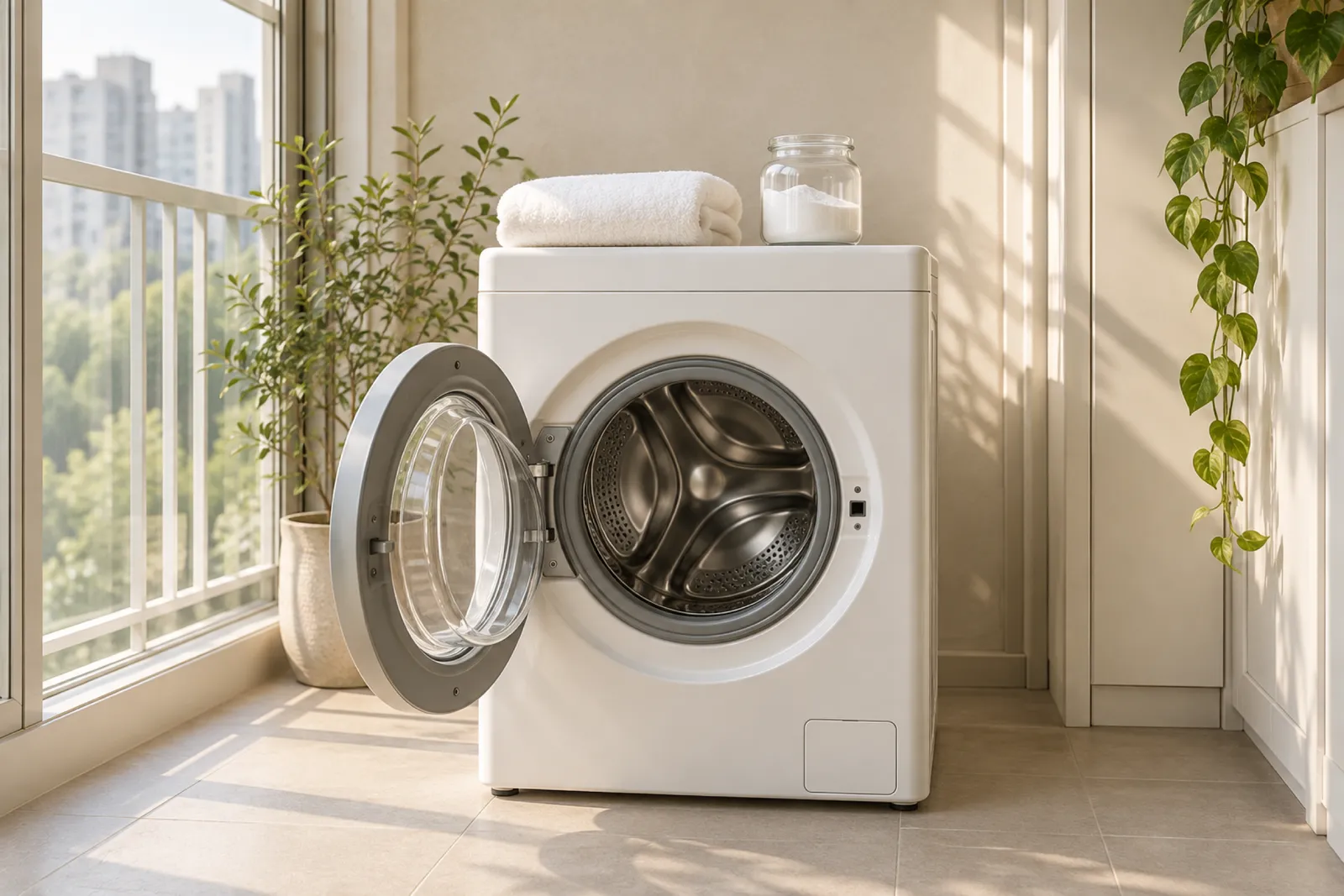
What you need
Supplies
- Oxygen-based washer cleaner or sodium percarbonate
- Mild dish soap
Tools
- Toothbrush
- Paper towels
- Rubber gloves
- Dry towel
- Shallow tray
How to do it
- 01
Clean the door seal
Fold back the rubber door seal and check the creases. Remove hair and lint first, then scrub off residue with a toothbrush dipped in soapy water and wipe it clean with a damp paper towel.
- 02
Remove and wash the detergent drawer
Pull the detergent drawer all the way out and press the release tab to remove it. Soak it in warm water to soften old detergent and softener, then scrub with a toothbrush. Mold often grows on the ceiling of the drawer slot, so wipe that too.
- 03
Clean the drain filter
Open the small panel at the bottom front and put a towel and a shallow tray underneath. Drain the leftover water through the small hose first, then unscrew the filter counterclockwise, remove coins and hair, rinse it and screw it back tightly.
- 04
Run the drum-clean cycle
With the drum empty, add washer cleaner as directed on the package and choose the drum-clean (tub clean) cycle. If using sodium percarbonate alone, start with about 150 g (2/3 cup). It dissolves best above 40°C (104°F), so a warm cycle works best.
- 05
Rinse once more
When the cycle ends, wipe away any black flakes left in the drum or seal, then run an extra rinse and spin. Lots of residue is normal for a machine that has never been cleaned.
- 06
Leave the door open to dry
Wipe the seal and door glass dry, then leave the door and detergent drawer half open for several hours. Getting rid of moisture keeps odors away until the next clean.
Be careful
- Never use bleach (chlorine) and citric acid or vinegar (acids) on the same day. Mixing them releases toxic chlorine gas. Use one type at a time.
- More water than you expect comes out of the drain filter. After a hot wash, wait until the water cools.
- Manufacturers recommend different cleaners and cycles. Check your manual first.
- Too much foam can trigger errors or overflow in a front-loader, so never use regular laundry detergent for a drum clean.
Malkkeum tips
- Using more detergent than recommended leaves undissolved residue that feeds mold. Use less, not more.
- The best cleaning habit is taking laundry out right away and leaving the door open.
- Set a monthly phone reminder for "clean the washer" so you never forget.
Why a drum clean matters
Front-loaders use little water and seal tightly, so the drum is always damp. Detergent residue, lint and body oils build up on the hidden outer side of the drum, mold grows there, and that is what causes musty-smelling laundry and black flakes on your clothes.
How often, by usage
| Usage | Drum clean | Seal and filter |
|---|---|---|
| Daily (family of 3+) | Monthly | Every 2 weeks |
| 3–4 times a week | Monthly | Monthly |
| 1–2 times a week (single) | Every 1–2 months | Monthly |
If laundry starts to smell or black bits appear, clean right away regardless of schedule.
Which cleaner to use
| Cleaner | Best for | Notes |
|---|---|---|
| Oxygen washer cleaner | Mold and detergent residue | The safest choice for most front-loaders |
| Sodium percarbonate | Same as above | Cheap; works best in warm water |
| Chlorine washer cleaner | Disinfecting and bleaching | Strong smell; ventilate; never with acids |
| Citric acid | Limescale | Weak on mold; use on a separate day |
If you are starting out, one oxygen-based washer cleaner is all you need. See the buying guide below for how to choose.