How to Descale an Electric Kettle
Boil citric acid water once and the white scale on the bottom dissolves. Once a month is enough.
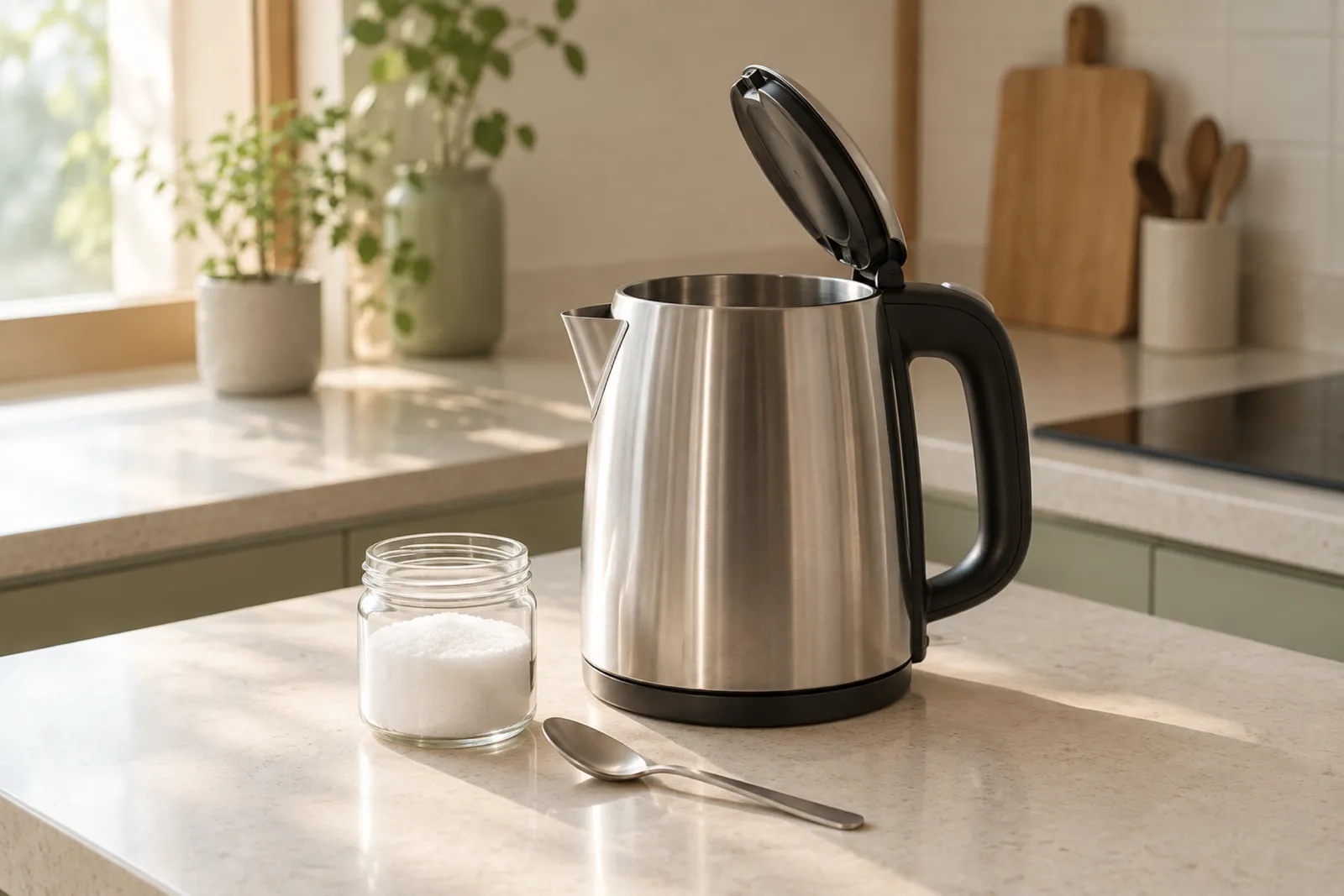
What you need
Supplies
- 1–2 tbsp citric acid
- Water
Tools
- Soft sponge
- Dry cloth
How to do it
- 01
Add water and citric acid
Fill the kettle to the max line and dissolve 1–2 tbsp of citric acid. Use 2 tbsp if the scale is thick.
- 02
Boil
Switch the kettle on and bring it to a boil as usual. The white scale on the bottom and walls starts to dissolve as it heats.
- 03
Leave for an hour
After it boils, keep the lid closed and leave it for about an hour. The warm citric acid slowly dissolves any remaining scale.
- 04
Empty and rinse
Pour out the water, wipe the bottom and walls gently with a soft sponge and rinse several times with clean water.
- 05
Boil plain water once or twice
Fill with clean water, boil and pour it away. If you can still taste citric acid, repeat once more.
Be careful
- Keep water away from the power base and the electrical contacts under the kettle. Never submerge the kettle.
- Steel wool scratches the stainless interior and can cause rust.
- Do not boil bleach or baking soda in the kettle. Baking soda does not dissolve limescale.
Malkkeum tips
- Empty the kettle after each use instead of leaving water in it, and scale builds up much more slowly.
- Households that use filtered water for tea get less scale.
- Wipe the inside of the lid and the spout filter with a paper towel soaked in the citric acid water.
What the white flakes are
The white film or flakes floating in your kettle are limescale: calcium and magnesium from tap water that harden as it boils. It is not harmful, but as it builds up, the kettle takes longer to boil and tea tastes dull. Limescale is alkaline, so it dissolves easily in citric acid.
Can I use vinegar?
Vinegar works on the same principle. Mix water and vinegar 3:1 and use the same method. The smell tends to linger in the kettle, though, so you will need to rinse more times. Odorless citric acid is much easier.
FAQ
There is a rainbow sheen inside my kettle. That is stainless steel reacting with heat and minerals. It usually fades along with the scale when you use citric acid, and it is not rust.