Are Closet Moisture Absorbers Bad for Your Lungs? Using and Emptying Calcium Chloride Safely
Closet moisture absorbers give off no fumes, so they are safe to breathe around. The collected liquid is what needs care, from spills to disposal.

In winter, a moisture absorber goes into every closet, bedding cabinet and shoe cabinet. With several chemical products around the home, it is natural to wonder whether they are safe to breathe around. The short answer: the common calcium chloride absorbers do not release anything into the air. The thing to be careful with is the liquid that collects inside.
How do they absorb moisture?
The white granules on top are calcium chloride. It pulls moisture from the air and dissolves in it, and that solution drips into the bottom compartment. A filling container means it is doing its job.
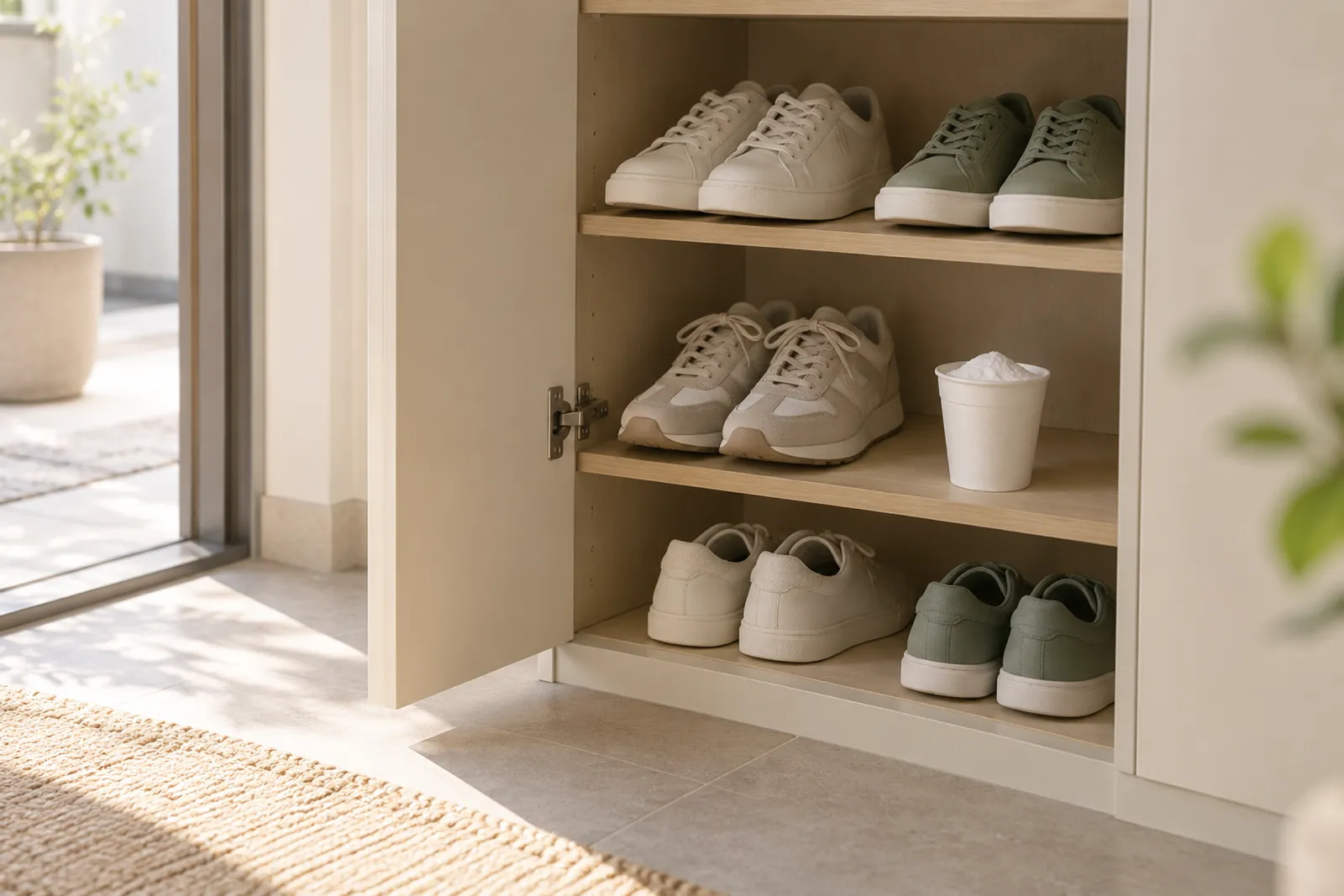
Calcium chloride is a non-volatile salt, so it gives off no gas or smell. Simply keeping one in a closet does not harm your lungs. Scented versions can bother people who are sensitive to fragrance, causing headaches or a stuffy nose. Choose unscented ones for a child’s room or if you react to scents.
The liquid is what needs care
The collected water is a concentrated calcium chloride solution, not plain water.
| Contact | What can happen | What to do |
|---|---|---|
| Skin | Stinging, dryness, itching | Rinse well under running water |
| Eyes | Strong irritation | Rinse under running water for 15+ minutes and see a doctor |
| Swallowed | Mouth and stomach irritation, vomiting | Do not induce vomiting; rinse the mouth and call emergency services or poison control |
| Clothes, leather | White marks, stiffness | Rinse with water right away |
| Metal, wood floors | Rust, discoloration, swelling | Wipe several times with a damp cloth and dry |
Cleaning up a spill
- Put on rubber gloves. The liquid can sting bare skin.
- Blot with a dry cloth or paper towels. Press rather than rub.
- Wipe two or three times with a damp cloth. Calcium chloride never fully dries; it stays sticky and keeps attracting moisture, so wipe with clean water several times.
- Dry and air out. On wood floors or closet bases, leave the door open until fully dry.
- Wash wet clothes right away. Rinse with water first, then launder.
Disposing of a used absorber
- Pour the liquid down the drain. Peel off the film, pour it into a sink or toilet and run plenty of water after it. Residue left in metal drains can corrode them.
- Leftover granules go in the trash.
- Rinse the container and recycle it as plastic if your area accepts it.
- The film or fabric cover goes in the trash.
Rules vary by area, so check the disposal instructions on the package too.
Homes with kids and pets
- Keep them out of reach. A high closet shelf or a cabinet with a closing door is best. Kids can open low shoe cabinets, so a hanging type placed high is safer.
- Place them where they will not tip. A door catching the container can spill it. Use a flat corner of the closet floor.
- Replace when about two-thirds full. A full container spills easily when moved.
- Keep pets from licking. Cats and dogs may lick the liquid or spill marks, so wipe any spill right away.
Other types of absorbers
| Type | Features | Best for |
|---|---|---|
| Calcium chloride (collects water) | Strong and cheap, liquid collects | Closets, bedding and shoe cabinets |
| Silica gel | No liquid, weaker absorption | Drawers, bags, small boxes |
| Charcoal, zeolite | Absorbs odors too, reusable after sun drying | Shoe cabinets, musty storage |
For shoe cabinet moisture and odors, see shoe cabinet odors.
Frequently asked questions
Can I leave one out in a room? It is not harmful, but in a large room with moving air it does very little. Manage room humidity with ventilation and a dehumidifier, and use absorbers in closed storage.
Do I need them in winter? Even when outdoor air is dry, heating and condensation bring moisture to closet walls. Closets against outside walls and north-facing rooms grow mold easily in winter, so absorbers help there.
Can I pour the liquid on plants or the yard? No. Calcium chloride damages roots and soil. Pour it down the drain with plenty of water.