Remove Stains and Odors from Cutting Boards
Oxygen bleach for plastic boards, coarse salt and lemon for wood. Care for each material the right way and they last for years.
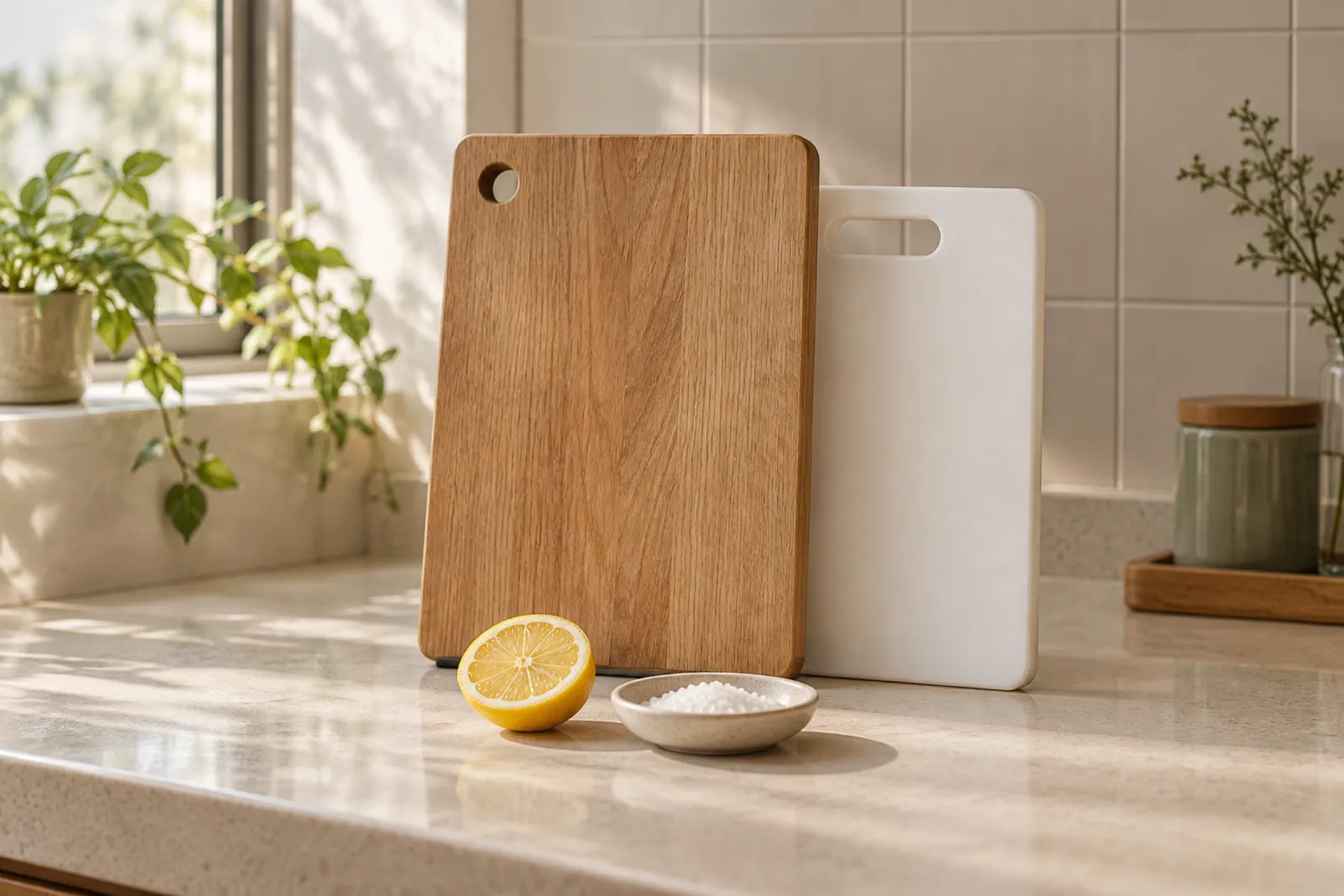
What you need
Supplies
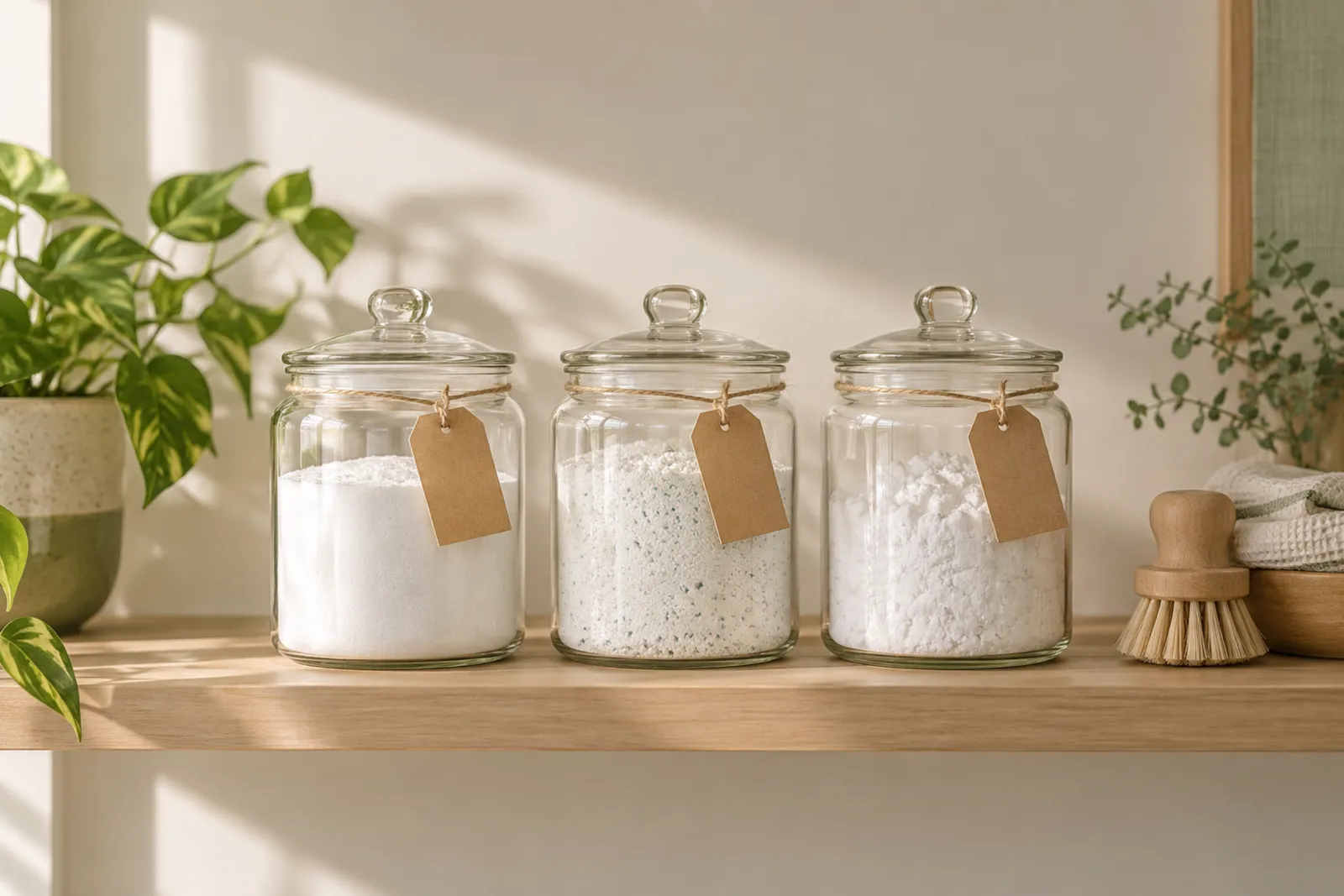
- 2 tbsp sodium percarbonate (plastic)
- Coarse salt and half a lemon (wood)
- Dish soap
Tools
- Tub or sink large enough for the board
- Scrub sponge
- Dry cloth
How to do it
- 01
Wash with dish soap first
Whatever the material, wash off food and grease with dish soap first. Move the sponge along the knife marks to clear out residue caught in the grooves.
- 02
Soak plastic boards in oxygen bleach
Dissolve 2 tbsp of sodium percarbonate in warm water at 40–60°C (104–140°F) and soak the board for 30 minutes. Red and yellow stains from chili or turmeric fade, and the board is sanitized at the same time.
- 03
Scrub wooden boards with salt and lemon
Never soak wooden boards, or they will crack. Sprinkle coarse salt over the surface and scrub firmly with the cut side of half a lemon. The salt acts as an abrasive and the lemon removes odors.
- 04
Rinse and dry standing up
Rinse well, wipe off the water and stand the board upright somewhere with airflow. Lying flat traps moisture underneath and invites mold.
- 05
Oil wooden boards
Once a month, when a wooden board is completely dry, rub in a thin layer of food-safe board oil or mineral oil. Oiled wood absorbs less water, so it stains and cracks less.
Be careful
- Keep wooden boards out of the dishwasher, boiling water and long soaks. They warp and split.
- Oxygen bleach irritates skin, so wear rubber gloves.
- Use separate boards for raw meat and vegetables, or wash the board with soap immediately after cutting meat.
Malkkeum tips
- If deep knife grooves stay dark even after cleaning, bacteria can hide there. It is time for a new board.
- Fishy smells come out easily with rice-rinsing water or diluted vinegar.
- Wetting the board with cold water before use helps stop colors and smells from soaking in.
Why cutting boards need extra care
A cutting board gets new tiny grooves every day from your knife. Moisture and food left in those grooves create an ideal place for bacteria to grow. So in addition to washing after every use, it is worth sanitizing once a week.
Care by material
| Material | Washing | Sanitizing and stains | Avoid |
|---|---|---|---|
| Plastic | Dish soap | Oxygen bleach soak, boiling water | Storing near heat |
| Wood | Dish soap, quickly | Salt and lemon, diluted vinegar | Soaking, dishwasher |
| Silicone / TPU | Dish soap | Boiling water, oxygen bleach | Harsh scouring pads |
FAQ
Can I use chlorine bleach? For plastic boards, a short soak at the dilution on the label is fine. Oxygen bleach is easier at home because it smells less and rinses off easily. If you do use chlorine bleach, rinse thoroughly so it never meets vinegar or citric acid.