When Your Dryer Leaves Clothes Damp — Cleaning the Lint Filter, Sensor and Water Tank
If drying takes longer or clothes come out damp, check the lint filter and moisture sensor first. Built-up lint also raises the fire risk.
What you need
Supplies
- Lukewarm water
- A drop or two of dish soap
Tools
- Soft brush
- 2 microfiber cloths
- Dry towel
How to do it
- 01
Switch off and unplug
Turn the dryer off and unplug it before cleaning. If it just finished a cycle, let the drum and filter cool for about 10 minutes.
- 02
Empty the lint filter
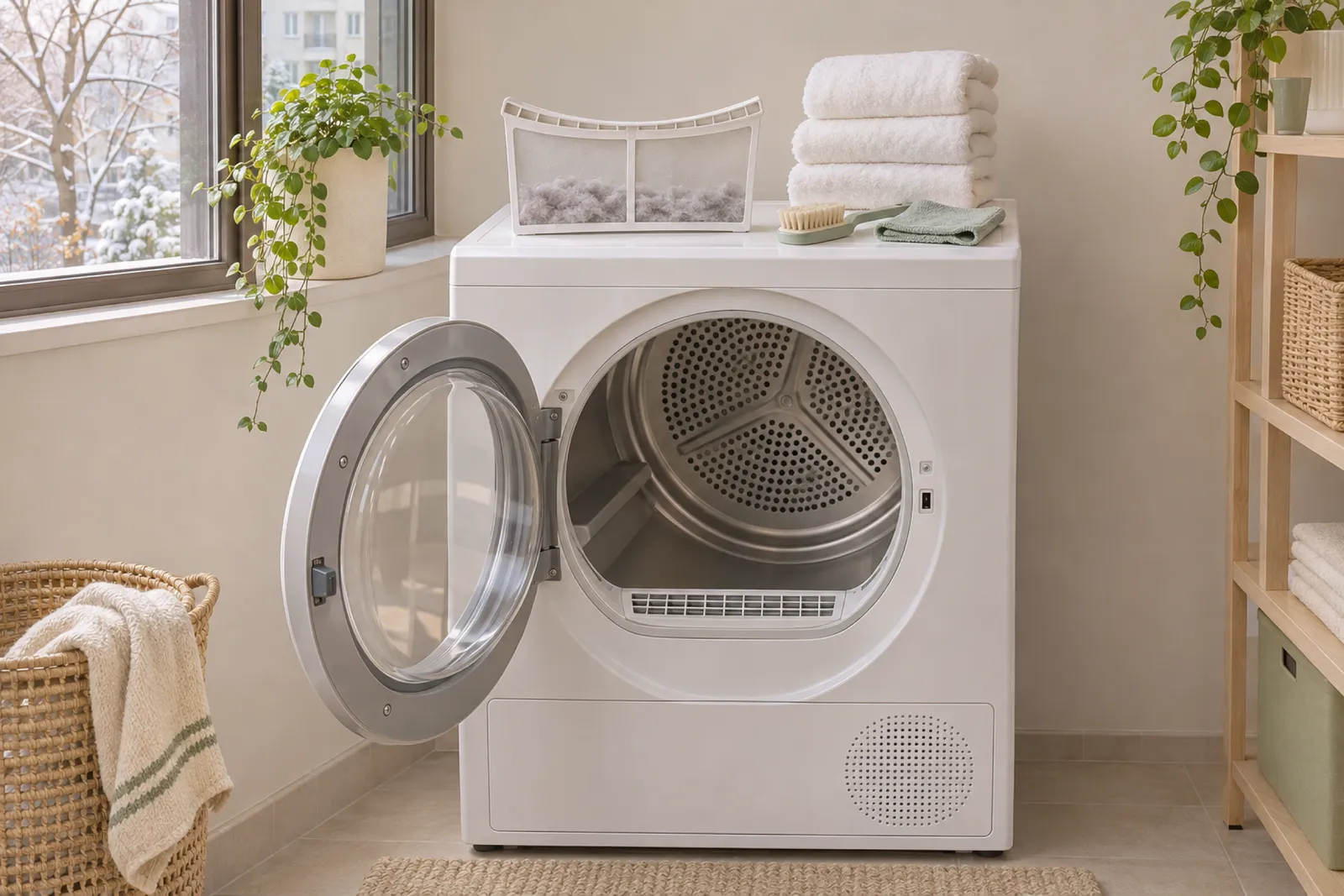
Pull out the lint filter inside or below the door, open it and remove the lint by hand or with a soft brush. If there are two layers, take out the inner one too. Ideally do this after every load.
- 03
Wash the filter and dry it completely
Once a month, rinse the filter in lukewarm water to remove softener film and fine dust from the mesh. If water barely drains through, add a drop of dish soap and brush gently. Air dry in the shade for about a day before refitting.
- 04
Wipe the filter housing
Lint collects where the filter sits too. Wipe what you can reach with a dry cloth or brush. Do not force your hand deep inside; use a vacuum crevice tool instead.
- 05
Wipe the moisture sensor and door seal
The two metal strips at the front inside the drum sense whether clothes are dry. Softener residue makes the cycle end early. Wipe them with a well-wrung damp cloth, then a dry one, and clean lint off the rubber door seal.
- 06
Empty and rinse the water tank
If no drain hose is connected, empty the tank after every load. Standing water smells and builds scale. Rinse and dry the tank once a month.
- 07
Follow the manual for the condenser
On heat pump dryers the condenser either cleans itself or has a cover you open to clean it, depending on the model. Follow only the method and schedule in the manual, and do not touch the sharp fins bare-handed.
Be careful
- Never run the dryer without the lint filter or with a wet filter. Lint gets inside and can cause breakdowns and fires.
- Do not dry rubber, foam or latex items such as bath mats or memory foam pillows. They can deform or catch fire.
- Cloths or clothes with cooking oil can ignite in a dryer even after washing if oil remains. Air dry them.
- Do not use abrasives or steel wool on the sensor or condenser.
Malkkeum tips
- More fabric softener means faster film buildup on the filter and sensor. Use less on loads you tumble dry.
- Hang a small brush near the dryer so emptying the filter becomes a habit.
- A spare filter lets you swap while the washed one dries.
Why clothes stay damp
A dryer blows hot air through the drum and recirculates it through the lint filter. A clogged filter restricts airflow, so drying takes longer and uses more power. Softener film on the moisture sensor makes the dryer think clothes are dry while they are still damp. These two causes explain most damp loads.
Where to look first
| Symptom | Check first |
|---|---|
| Cycles take longer than before | Clogged lint filter, dusty condenser |
| Ends quickly but clothes are damp | Film on the moisture sensor |
| Musty smell after drying | Standing water in the tank, dusty door seal |
| Filter warning comes on often | Clogged mesh (needs washing) |
Why lint buildup is dangerous
Dryer lint is made of fine fibers that ignite easily. If the filter is not emptied, lint can pass inside and settle near hot parts. Most dryer fires start with a neglected filter, so emptying it every time is the surest prevention.
Frequently asked questions
Can I use dryer sheets? You can, but their softening agents coat the sensor and filter. If you use them, clean both more often.
The filter has a hole. Can I keep using it? Lint will get inside through the hole. Replace it with the same model filter from the manufacturer.