How to Clean a Rice Cooker Gasket and Steam Vent
If your rice smells off, the lid is usually to blame, not the pot. Clean the steam vent and rubber gasket properly and the flavor comes back.
What you need
Supplies
- Dish soap
- 1 tbsp vinegar (for strong odors)
Tools
- Soft sponge
- Toothbrush
- Toothpick
- Dry cloth
How to do it
- 01
Unplug and cool
Unplug the rice cooker and wait until it is completely cool. If it was on keep-warm, the inside of the lid will be hot.
- 02
Remove the steam vent
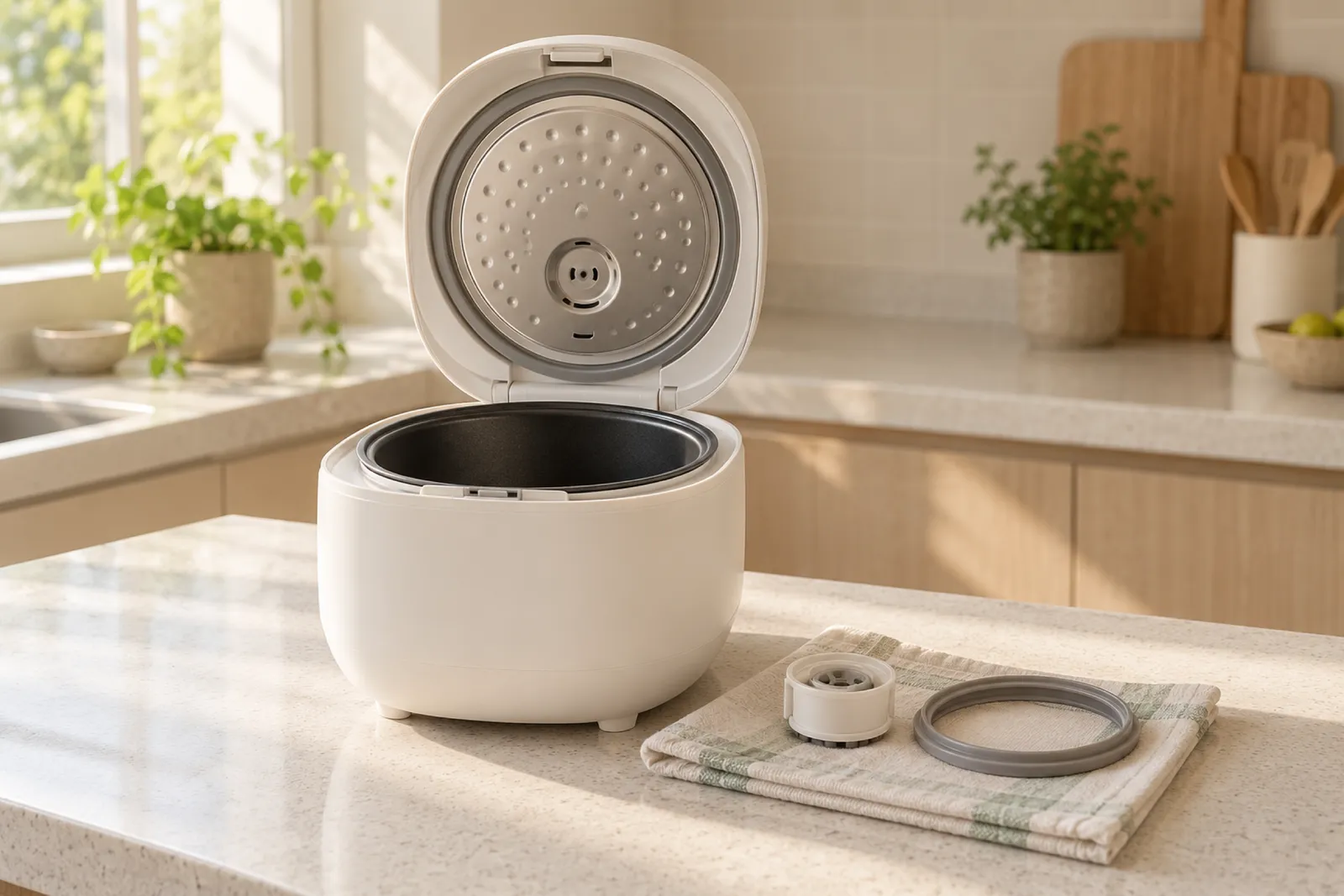
Twist or pull the steam vent cap off the top of the lid. If starch has dried inside, soak it in warm water, then scrub with a toothbrush and clear the small holes with a toothpick.
- 03
Wash the inner lid and gasket
Remove the metal inner lid and scrub rice grains and residue from the rubber gasket around it with a toothbrush. If the gasket comes out, wash it separately, dry it fully and put it back.
- 04
Treat the inner pot gently
Wash the inner pot with a soft sponge and dish soap. If the coating wears off, rice sticks and the metal underneath is exposed, so avoid steel wool and abrasives.
- 05
Run the auto-clean
If your cooker has an auto-clean or steam-clean function, fill the pot with water to the marked line and run it. Add 1 tbsp of vinegar for strong odors if your manual allows. Pour out the water and leave the lid open to dry.
- 06
Wipe inside the base
With the pot removed, wipe away rice grains on the heating plate and rim with a dry cloth. Debris on the plate stops the pot sitting flat, which can leave rice undercooked.
Be careful
- Do not pour water on the base or heating plate. They contain electrical parts.
- A torn or hardened gasket leaks pressure and spoils the rice. Get a replacement from the manufacturer.
- Auto-clean methods and whether vinegar is allowed differ by model. Check your manual first.
Malkkeum tips
- Long keep-warm times let rice smells soak into the lid. Freeze leftover rice in portions instead.
- Leaving the lid open to dry after cleaning keeps the gasket from smelling.
- Just rinsing the steam vent after each cook stops starch drying inside.
The real cause of rice smells
If rice smells sour or musty, suspect the lid before the pot. Every time you cook, starchy water rises with the steam and dries a little on the steam vent, inner lid and rubber gasket. That smell then travels back into the rice with the steam next time.
Gaskets are consumables
The rubber gasket of a pressure rice cooker hardens and loosens over time from constant steam and pressure. If you hear steam escaping while cooking or the rice does not taste as good, it is time for a new gasket. Many manufacturers suggest replacing it roughly once a year; check your manual.
FAQ
The coating on my inner pot is peeling. Can I keep using it? A peeling pot makes rice stick and is harder to clean. Most manufacturers sell inner pots separately, so we recommend replacing it.