Your Cleaning Tools Need Cleaning Too — Care and Replacement Guide
Wiping with a smelly dishcloth spreads bacteria across your table. How to clean each tool and when to replace it.
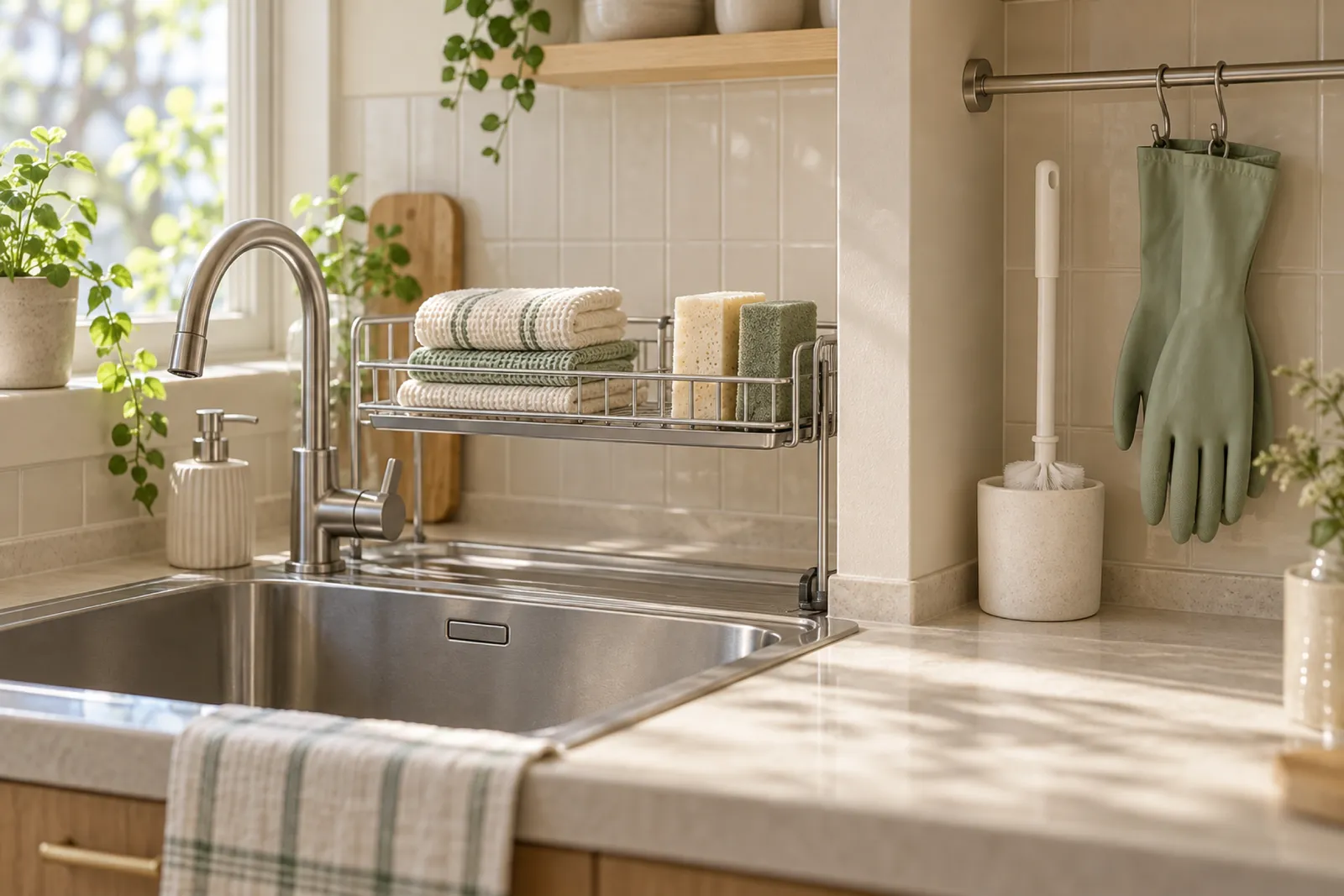
Ever wiped the table only to find it smells sour afterwards? The culprit is not the table but the dishcloth. Cleaning tools move grime around every day, so if they are not dried and sanitized properly, they become the first place bacteria and odors grow.
Dishcloths: wash daily, dry spread out
A wet dishcloth left bunched up starts to smell within hours. Wash it with soap after use and spread it out to dry. Once or twice a week, boil it or soak it in hot water with oxygen bleach for 30 minutes. If the smell will not go even after sanitizing, it is time for a new one.
Keeping several cloths and rotating one per day gives each one time to dry fully, which is far more hygienic.
Sponges: stand them up to dry
Sponges are full of holes where food gets trapped. After washing up, rinse out the food, squeeze it firmly and stand it up or hang it so it does not sit in water. Soak it in oxygen bleach once a week and replace it every 2–4 weeks, or sooner if it loses its shape or smells.
Mops and microfiber: separately, no softener
- Fabric softener clogs microfiber and reduces absorbency and dust pickup.
- Washed with clothes, microfiber grabs lint. Wash cleaning cloths together, separately from clothes.
- Always keep bathroom cloths separate from kitchen cloths. Color-coding makes it easy.
Vacuum: empty the bin every time
A full bin reduces suction and smells. Empty it after each use and cut hair off the brush roll with scissors. Clean or replace the filter as the manufacturer recommends, and if it is washable, make sure it is completely dry before refitting.
Toilet brush and bath brushes
After use, rinse the toilet brush in the flushing water, then wedge it under the seat to drip dry before returning it to the holder. Water pooling in the holder breeds bacteria. Replace it every 3–6 months.
Rubber gloves
The inside of rubber gloves gets sweaty, which leads to odor and mold. Turn them inside out to dry now and then, and always keep kitchen and cleaning gloves separate. When switching between different cleaners, rinse the gloves before starting the next job.
Print the replacement log
It is easy to forget when you last replaced a tool. Use Download PDF below to print the A4 sheet, stick it inside a cupboard and note the date each time.